NORTH WEST QUEENSLAND REGIONAL ORGANISATION OF COUNCILS
Shaping the future of our region
Our member councils
Working together to make North West Queensland a region attractive for people and business to live, work and invest.
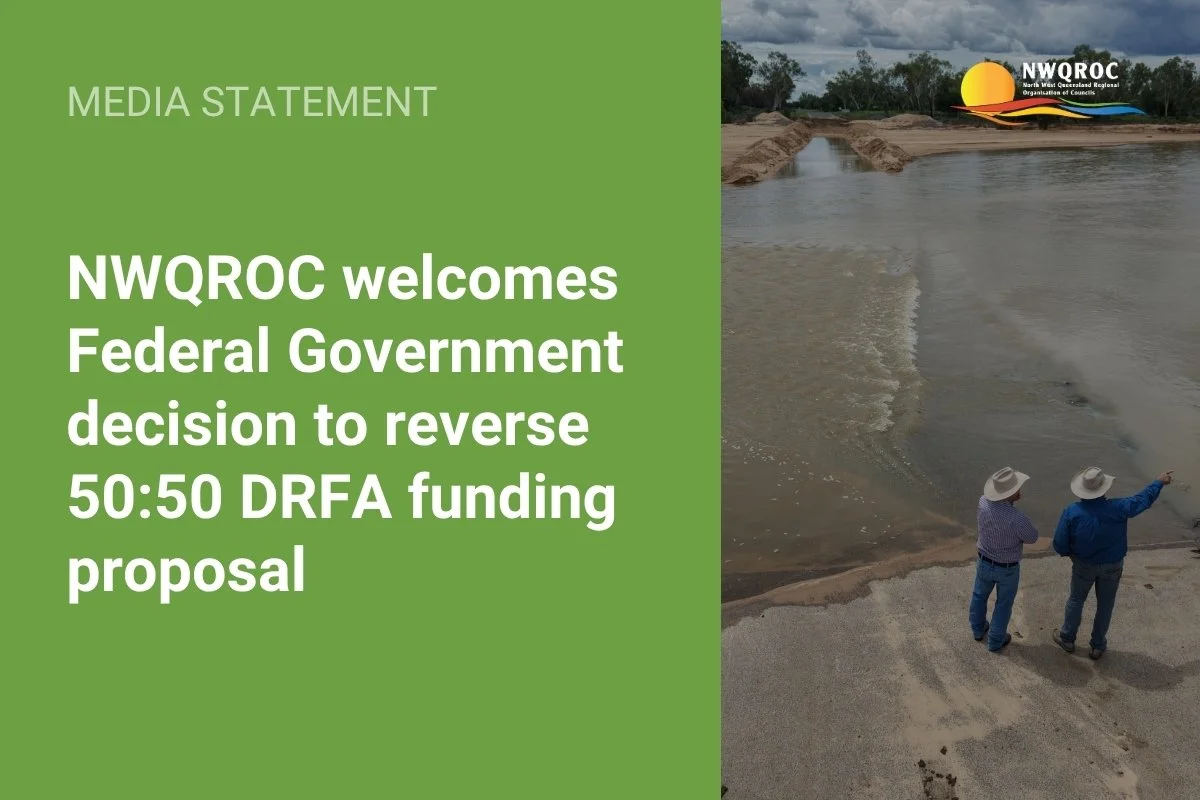
The North West Queensland Regional Organisation of Councils (NWQROC) congratulates the Federal Government on its decision to reverse the proposed 50/50 changes to the Disaster Recovery Funding Arrangements (DRFA).
The group of 12 councils have welcomed a policy outcome that preserves timely and effective disaster recovery support for regional communities, and supports those local governments that lead disaster response across their communities.
The North West Queensland Regional Organisation of Councils (NWQROC) is seeking an energetic and adventure driven appointee to be their inaugural Regional Waste Behaviour Change Coordinator.
Reporting to the CEO to 30 June 2028, and based anywhere in North West Queensland, this split position will deliver two business functions for the benefit of NWQROC members and the broader communities they represent.
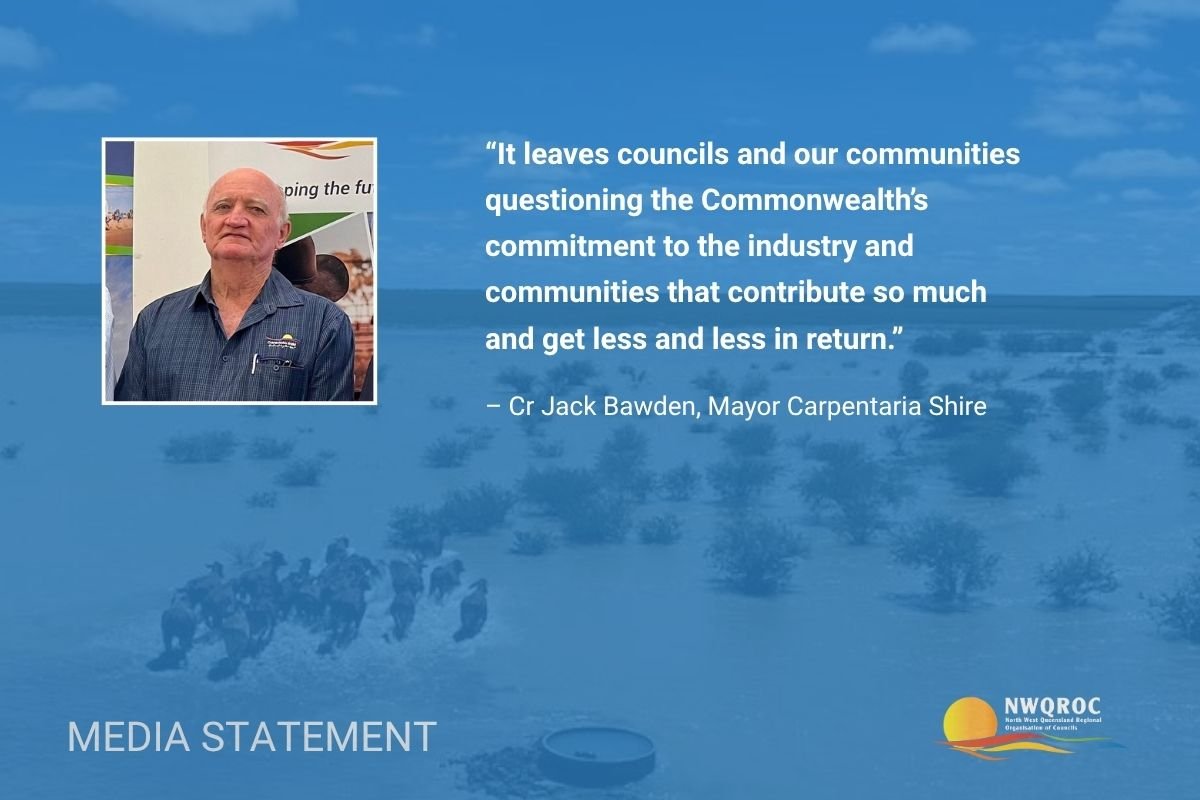
Carpentaria Shire Council is warning proposed changes to Australia’s Disaster Recovery Funding Arrangements (DRFA) could make large-scale emergency responses such as coordinated fodder drops harder to fund in future disasters.
During major North West Queensland flooding earlier this year, the Australian and Queensland Governments jointly funded an initial $2 million emergency fodder support package, including Carpentaria Shire, followed by a $12 million Coordinated Emergency Fodder Support Package across 10 flood-affected council areas. The assistance supports extraordinary costs associated with getting emergency fodder to isolated livestock.
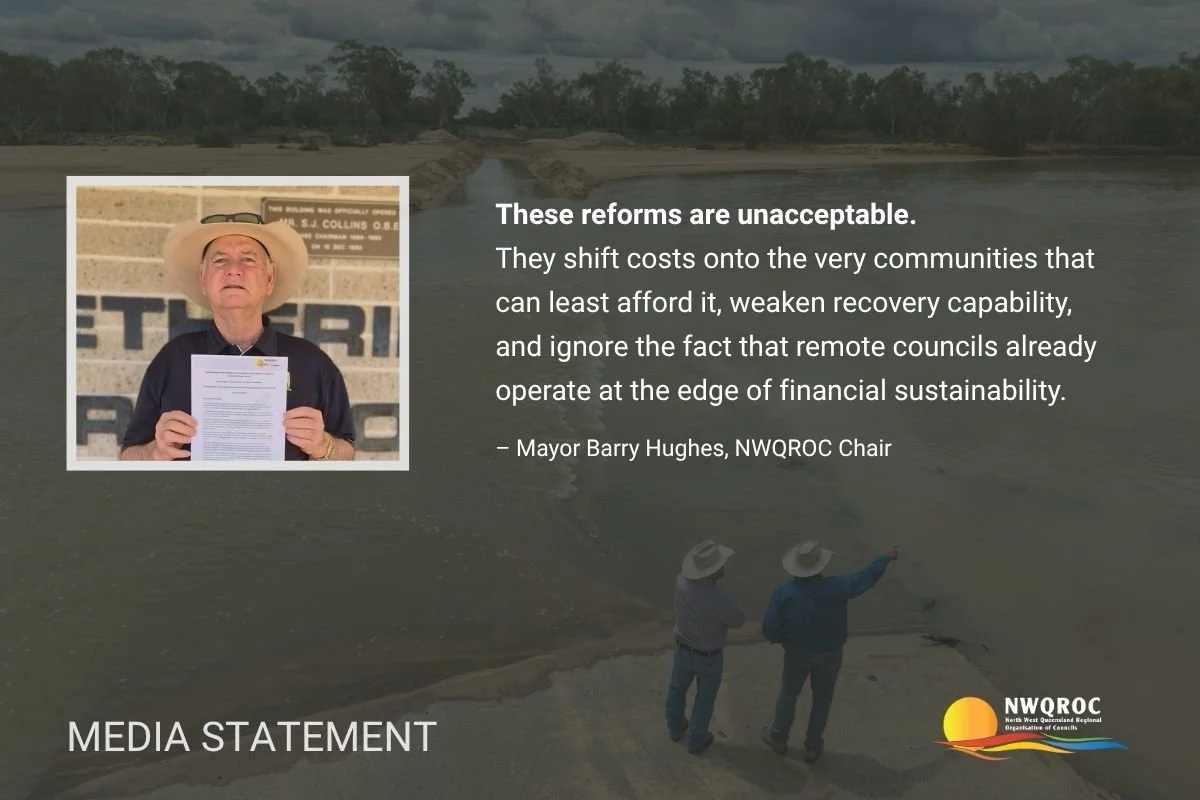
The North West Queensland Regional Organisation of Councils (NWQROC) has lodged a formal submission to the National Emergency Management Agency (NEMA) strongly opposing the Federal Government’s proposed Disaster Management Reforms, warning that the changes would leave remote communities exposed, delay recovery, and shift millions of dollars in additional costs onto councils and primary industries.